Central Machinery 12" x 33-3/8" Wood Lathe Available Cert Required
Back to Equipment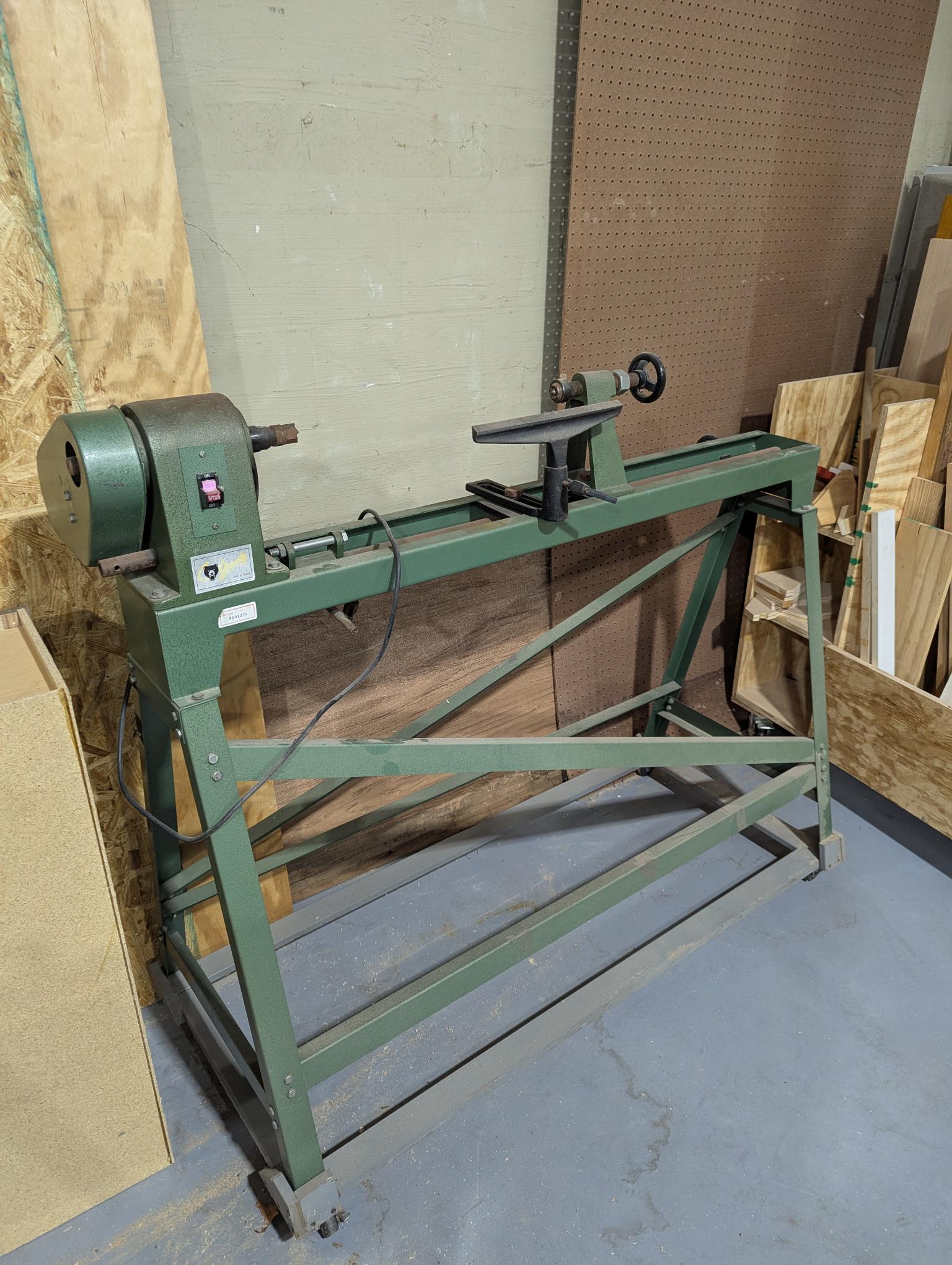
The Central Machinery 34706 is a full-size cast iron wood lathe with a 3/4 HP motor delivering variable speed from 600 to 2,400 RPM via a Reeves drive system adjustable while running. It features a 12-inch swing over the bed with 33-3/8 inches between centers, providing capacity for spindle turning, bowl turning, and faceplate work. The headstock pivots and locks at multiple positions to allow outboard turning of larger diameter pieces. The spindle is threaded 1 inch by 8 TPI with a #2 Morse Taper in both headstock and tailstock. The lathe includes a 3-piece banjo and tool rest system with extension for outboard work, a spur drive center, cup tailstock center, 6-inch faceplate, and a steel leg stand. This machine is a well-known clone of the Jet JWL-1236, and Jet and Grizzly G0584 parts and accessories are interchangeable. Any 1 inch by 8 TPI scroll chuck and MT2 accessories fit directly. Suitable for turning bowls, spindles, pens, table legs, finials, boxes, and other woodturning projects.
- Inspect wood blank for cracks, knots, loose bark, and embedded metal before mounting.
- Select appropriate mounting method: between centers (spur and live center) for spindle work, or faceplate/scroll chuck for bowl and faceplate turning.
- Mount the workpiece securely. For between-centers work, seat the spur center firmly in the headstock and advance the tailstock live center snugly into the opposite end. Lock the tailstock.
- Position the tool rest close to the workpiece (approximately 1/8 inch gap) and slightly below center height. Lock the banjo and tool rest clamps.
- Hand-rotate the workpiece a full revolution to verify it clears the tool rest and bed with no contact.
- Put on full face shield, dust mask, and hearing protection. Remove any loose clothing, jewelry, or gloves. Tie back long hair.
- Set the speed to the lowest setting (600 RPM) for rough or unbalanced stock. Use the Reeves drive lever to adjust speed while the lathe is running.
- Stand to the side of the workpiece (out of the firing zone) and turn on the lathe. Allow it to reach stable speed before approaching with a tool.
- Begin cutting with the appropriate turning tool held firmly on the tool rest. Use a roughing gouge first to round the blank, then switch to detail tools as needed.
- Stop the lathe periodically to readjust the tool rest closer to the workpiece as material is removed. Always recheck clearance by hand-rotating before restarting.
- For speed changes, use the Reeves drive lever while the lathe is running. Increase speed as the workpiece becomes balanced and round. General guideline: diameter in inches multiplied by RPM should fall between 6,000 and 9,000.
- For sanding, remove the tool rest, hold sandpaper on the bottom half of the spinning workpiece (where rotation moves away from you), and wear a dust mask or respirator.
- When finished, turn off the lathe and wait for it to come to a complete stop before touching the workpiece or making adjustments.
- Remove the workpiece and clean wood chips and shavings from the lathe bed, banjo, and tool rest area.
- Periodically check and lubricate the tailstock quill, banjo clamp, and bed ways. Keep the bed clean and lightly waxed to prevent rust.
- Woodworking Certification (Category)